Exosomes are a type of extracellular vesicle (EVs) secreted by cells, with a size of 30-150nm. They have a bilayer membrane structure and a tea tray like morphology, and contain abundant contents (including nucleic acids, proteins, and lipids). As important signaling molecules, they form a new intercellular information transmission system and can participate in processes such as cell communication, cell migration, angiogenesis, and tumor cell growth.
In 1996, Dutch postdoctoral fellow Gra ç a Raposo, while studying immune cell responses to foreign molecules, unexpectedly discovered that cells were sending "secret messages" to each other by releasing vesicles, which were actually exosomes
Extracellular vesicles are a type of extracellular vesicle that are very small, with a diameter of only 40-160 nanometers, equivalent to one fifth to one thousandth of the diameter of a human hair, yet they play a significant role. They act as "messengers" between cells by carrying various molecules such as proteins, lipids, DNA, and RNA, and participate in regulating various physiological processes such as tissue repair and regeneration, immunity, inflammation, etc.
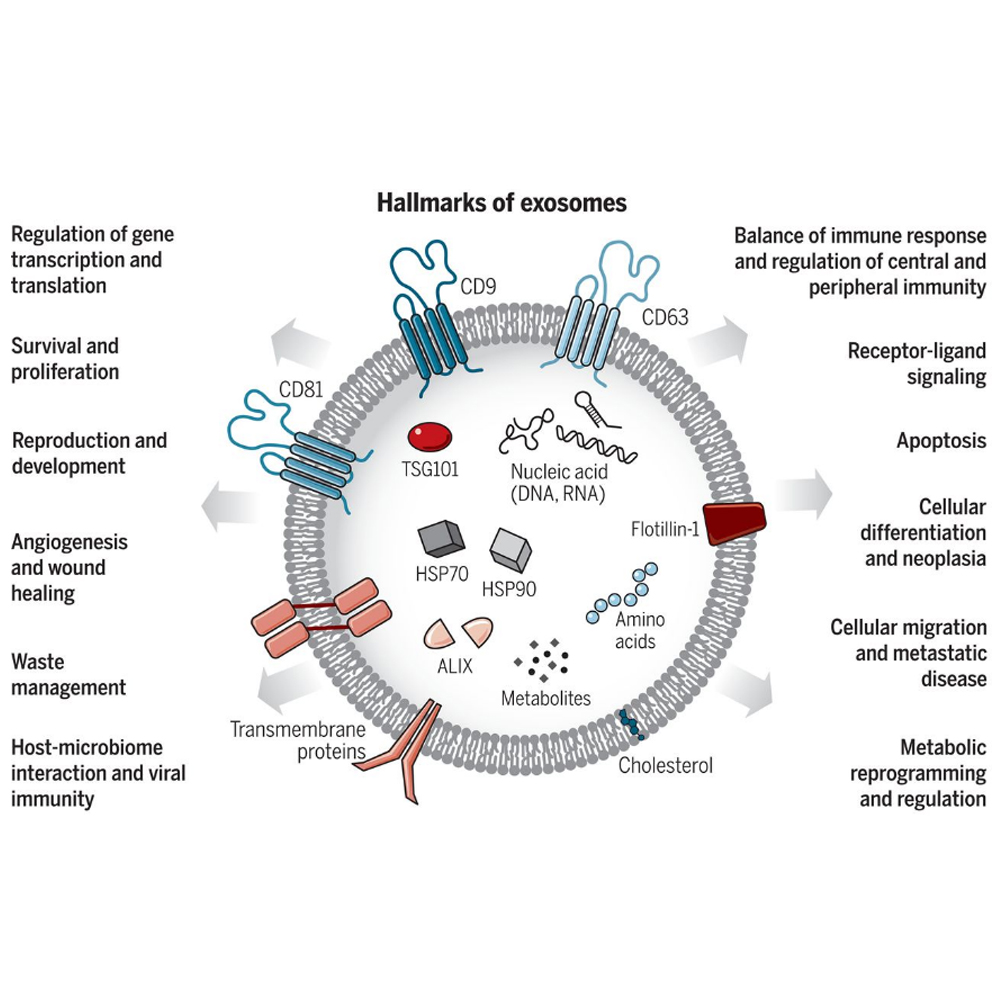
Although extracellular vesicles play an important role in cellular communication, their impact is not always positive, but rather has "two faces" that can promote or inhibit disease development, promote or inhibit disease development, and promote or inhibit disease development! For example, some immune cells release extracellular vesicles carrying tumor antigen information, which can activate T cells, enhance the body's anti-tumor immune response, and thus inhibit tumor growth; However, extracellular vesicles from cancer cells can help other cancer cells evade immune system surveillance and even transmit resistance signals, enabling surrounding cancer cells to develop drug resistance. Even more complicated is that the "family of origin" and "upbringing experience" can also affect the efficacy of extracellular vesicles: extracellular vesicles produced by the same cell carry different contents and have different effects; The same extracellular vesicles, when entering different types of cells, will trigger different biological reactions under the influence of receptors and internal environment.
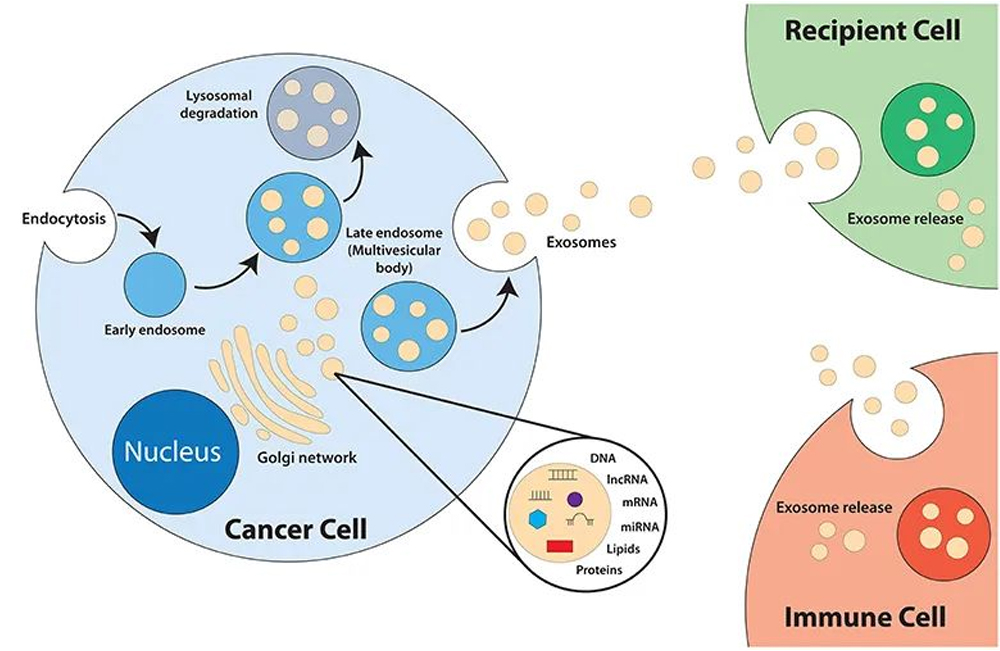
At present, scientists are exploring how to take the essence and discard the dross, and only play the positive role of exocrine body. As of the time of writing, there have been over 200 clinical trials of extracellular vesicles registered on the ClinicalTrials.gov website, covering treatments such as hair loss, cancer, aging, and lung infections. The future seems promising. However, upon closer inspection, it will be found that these trials are mostly early-stage clinical trials with varying quality. To this day, no extracellular vesicle therapy has been approved for clinical treatment. Choosing extracellular vesicle therapy in this situation is a great test of one's character. In 2023, a plastic surgery clinic in Japan performed exosome treatment for several customers. One of the customers was a relative of a clinic staff member who was in the late stage of lung cancer at the time. After injecting extracellular vesicles, the condition deteriorated sharply. Although research on extracellular vesicles is still on the way, a businessman with a keen sense of smell has successfully monetized it, fully tapping into the potential of this gold mine that may or may not exist. In 2016, extracellular vesicles were still a new concept in the medical field in the United States, and few clinics provided such services; But by 2021, there were over 100 clinics in the United States offering extracellular vesicle therapy. In the next 7 years, the compound annual growth rate of the global extracellular vesicle market will reach as high as 28.38%
Faced with the popularity of extracellular vesicles, researchers are very confused: even though the number of extracellular vesicle research has continued to increase in recent years, no breakthrough progress has been made, and there is a lack of substantial evidence to support its safety and effectiveness. Nevertheless, extracellular vesicle therapy has inexplicably become popular like many internet memes. From the promotion of many clinics, it can be seen that the popularity of extracellular vesicles is partly due to the benefits of stem cells. The repair and regeneration ability of stem cells mainly comes from the "paracrine factors" released by stem cells, which regulate the behavior of surrounding cells by releasing soluble molecules and extracellular vesicles (such as exosomes).
In theory, the repair and regeneration ability of extracellular vesicles is not inferior to that of stem cells, and they perfectly avoid the risks of immune rejection during stem cell transplantation. They are not as prone to cancer as stem cells, and it is simply unacceptable that they are not popular. Japan is at the forefront of this field. Because the government has not yet introduced regulatory laws for extracellular vesicle therapy, the related industry is thriving.
A survey report by a Japanese think tank shows that at least 669 Japanese medical institutions are providing extracellular vesicle therapy services, exceeding the total number of institutions in the United States and the European Union.
Compared to Japan's freedom, Europe and America have to some extent 'laws to follow'. The Public Health Service Act and the Federal Food, Drug, and Cosmetic Act in the United States stipulate that extracellular vesicle products used for therapeutic purposes must be regulated in accordance with drug and biological product standards. In the EU region, natural exosomes also need to comply with regulatory standards for biopharmaceuticals. However, regulation is subject to regulation, and clinics can choose whether or not to accept it. Some clinics are more low-key, playing a borderline game by packaging extracellular vesicles into cosmetics for promotion, bypassing regulatory restrictions. As for whether customers will inject cosmetics that are only allowed to be applied into their bodies when they arrive at the clinic, it's another matter. There are also some clinics that don't even wear them, openly claiming that extracellular vesicle therapy can treat aging, hair loss, skin problems, autism, rheumatism, Parkinson's disease, etc., treating diseases with illness and anti-aging beauty without illness, with fees ranging from $99 to $20000.
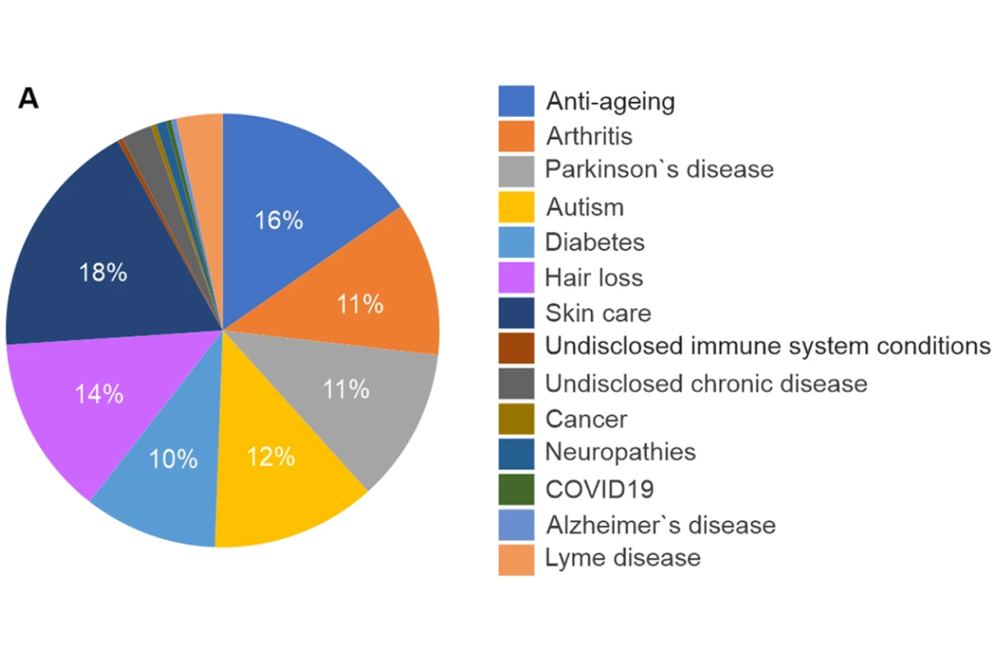
Of course, whether it is Japanese clinics or European and American clinics, it is currently difficult to provide reliable evidence to prove the effectiveness of using extracellular vesicles to improve hair loss or treat arthritis. Only clinic medical qualifications, extracellular vesicle sources, a small number of clinical trials, and comparative curves before and after patient use can be used to save the country.
At present, most of the clinical research on extracellular vesicles is exploratory research conducted by hospitals or research institutions. Only two companies' extracellular vesicle therapy products have entered Phase I clinical trials, Exopharm from Australia and United Therapeutics from the United States
Before the results of Phase 3 clinical trials appear, we can all try our best to look forward to them


